
Tesla Solar Panels Review 2026: Are They Worth the Agonizing Wait? (And What to Do if the Grid Goes Down Today)

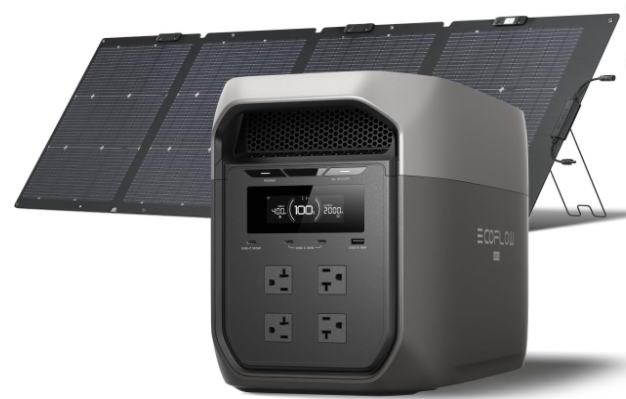

- Ultra-Fast Charging, 0–80% in Just 1.13 Hours – Thanks to EcoFlow’s advanced X-Stream technology, DELTA 3 Max can rechar…
- Up to 3400W Continuous X-Boost Mode – Power 99% of Appliances – With an impressive 3400W X-Boost output, this portable p…
- Ultra-Quiet Performance & Rapid 10ms Transfer Time – Designed for home backup, DELTA 3 Max kicks in with less than 10ms …
Let’s skip the corporate fluff and get straight to the reality of home energy in 2026. The aging American power grid is under more strain than ever. Between rolling blackouts in California, deep freezes in Texas, and increasingly severe storm seasons across the East Coast, energy independence is no longer just a luxury — it’s becoming a matter of household security.
When homeowners think about cutting the cord, the first name that inevitably comes to mind is Tesla. Elon Musk’s sleek, futuristic energy ecosystem has dominated the conversation for years. But does the reality of ordering Tesla solar panels actually live up to the glossy marketing?
To give you the unfiltered truth, we didn’t just read a brochure. We dug into installation timelines, real customer experiences, and pricing data to see whether Tesla Solar is truly the best move for your home — or whether you’re better off looking at immediate, heavy-duty alternatives.
Here’s what you need to know before you sign that contract.
## The Allure: Why Everyone Wants Tesla Solar Panels
Let’s give credit where it’s due. When it comes to aesthetics and whole-home integration, Tesla is widely regarded as a leader in residential solar design.
Tesla’s traditional solar panels feature a low-profile, sleek black design with integrated front skirts that hide the mounting hardware. They don’t look like bulky equipment bolted to your roof — they’re built to look like a natural extension of your home.
Pair their panels with the well-known Tesla Powerwall and manage it all through their app, and you get a fully integrated, grid-tied system. This means it connects directly to your city’s power grid, running your entire house — including heavy loads like a central AC unit — while potentially sending excess power back to the utility company for credits.
## The Reality Check: The Waiting Game
Here’s where the dream hits a real obstacle. If a storm is brewing or your utility company just announced a rate hike, you want a solution now — not in a year.
Tesla Solar, like most full-scale rooftop solar installers, operates on a timeline that can test anyone’s patience. Because the process relies on local permitting, utility interconnection approval, and a backlog of contractors, installation is rarely fast.
A full grid-tied system is also a major financial commitment — commonly in the $20,000–$40,000+ range before federal tax incentives, depending on system size and location. But for many homeowners, the bigger cost is time.
Here’s what the real-world timeline can look like:
– **The Assessment & Design**: Weeks of waiting just for a site survey.
– **The Red Tape**: Permitting through local municipalities and getting interconnection approval from your utility company can take weeks to months.
– **The Installation Backlog**: Depending on your state and the installer’s queue, going from a paid deposit to actually generating your own power can take anywhere from a few months to over a year.
Can your household afford to wait that long for backup power while grid reliability remains uncertain?
# The Heavy-Duty Amazon Alternatives: Power Without the Wait
If you’ve decided you can’t wait months for a traditional grid-tied system, the consumer market has responded with some serious hardware. Here’s a look at the top-tier, heavy-duty systems available right now on Amazon that can handle a grid-down scenario for an American household.
Forget small camping chargers — we’re talking about industrial-strength, high-capacity solar generators and high-yield panels that can run refrigerators, sump pumps, and even air conditioners. Two of the most established names in this space are EcoFlow and Renogy.
Here’s why these systems have become a popular bypass to the slower rooftop solar process.
## 1. The EcoFlow DELTA Pro Ecosystem: Premium Portable Power
If you want a premium feel, smart app integration, and serious power output without permitting delays, the EcoFlow DELTA series — particularly when paired with their 400W rigid or portable monocrystalline panels — is one of the most capable systems in the portable power category.
EcoFlow has essentially condensed a mini whole-home backup system into a portable unit. Their 400W panels are rated for high conversion efficiency and are designed to perform well across varying light and temperature conditions. But the real story is the power station itself.
**Why It Stands Out:**
– **Fast Deployment**: Order it on Amazon, it arrives at your door within days, and you plug it in. No permits, no contractor scheduling.
– **High Output**: A single DELTA Pro unit can output up to 3600W (with surge capacity higher), and units can be chained together with a compatible transfer switch to back up select circuits in your home, with expandable capacity for extended runtime.
– **Smart App Ecosystem**: A companion smartphone app lets you monitor wattage intake, track output, and manage battery health remotely.
## 2. Renogy High-Yield Solar Kits: The DIY Workhorse
If EcoFlow is the premium all-in-one option, Renogy is the rugged, build-it-yourself alternative. Renogy has been outfitting off-grid cabins, RVs, and remote homesteads for years, and their 400W to 800W solar panel kits are known for durability.
If you’re handy and want to build a dedicated emergency backup system without a massive upfront cost, Renogy kits typically include charge controllers, wiring, and high-efficiency monocrystalline panels — giving you the core components of an off-grid system at a fraction of the cost of a contracted rooftop installation.
**Why It Stands Out:**
– **Durability**: Built with corrosion-resistant aluminum frames and high waterproof ratings, Renogy panels are designed to hold up across a range of climates — from desert heat to heavy snow loads.
– **Cost-to-Power Ratio**: You’re paying primarily for the hardware itself, without the overhead of a full-service installation company.
– **Independence**: A dedicated off-grid battery bank paired with Renogy panels gives you a power source that’s isolated from the grid entirely, so a multi-day outage doesn’t have to mean a multi-day blackout for your critical appliances.
## The Bigger Picture: Flexibility vs. a Permanent Installation
The key difference between a traditional Tesla-style rooftop installation and these portable alternatives comes down to flexibility and timeline.
A rooftop system is a long-term, whole-home investment that ties into your utility grid and typically increases your home’s value. A portable system like EcoFlow or Renogy trades some of that scale for speed, mobility, and a lower upfront commitment — you buy the hardware, it arrives at your door, and you have backup power in place much faster.
Neither option is objectively “better” — it depends on whether your priority is full home energy independence or fast, flexible emergency backup.
# FAQs: What Every Homeowner Should Know
Before making a significant investment in home energy backup, it’s natural to have questions. Here are answers to the most common concerns homeowners have when comparing a traditional rooftop installation to a heavy-duty portable alternative.
**Do these portable systems qualify for the Federal Solar Tax Credit?**
This is an area where the rules are genuinely nuanced, so don’t take any blog’s word for it — including this one. In general, the Residential Clean Energy Credit can apply to qualifying solar panels and battery storage systems, including some portable setups, but eligibility depends on factors like how the system is used, installation requirements, and current IRS guidance, which can change from year to year. Before assuming a purchase qualifies, check the most current IRS guidelines or speak with a CPA. Don’t make a buying decision based on an assumed tax credit until you’ve confirmed it for your specific situation.
**I’m not an electrician. Is setting this up too complicated?**
Not necessarily. Systems like the EcoFlow DELTA series are largely plug-and-play for running individual appliances directly. If you want to integrate a unit into your home’s electrical panel so your wall outlets work during an outage, you’ll need a manual transfer switch (available on Amazon) installed by a licensed electrician — typically a straightforward job that takes a couple of hours. This lets you skip a lot of the overhead of a full installation company while still getting a safe, code-compliant setup.
**What about my Homeowners Association (HOA)? They’re strict about roof panels.**
This is exactly why portable and semi-portable rigid panels have grown in popularity. Because these panels aren’t permanently mounted to your roof, they often fall outside the scope of strict HOA architectural rules that apply to fixed rooftop installations. You can set up panels in a backyard or on a temporary ground rack and adjust as needed — though it’s still worth double-checking your specific HOA’s bylaws, since rules vary widely by community.
## The Final Verdict: Match the System to Your Actual Need
At the end of the day, the right choice depends on what you’re actually trying to solve. Tesla continues to make polished, premium products, and a full rooftop system remains the strongest option if your goal is complete, permanent, whole-home energy independence tied into the grid.
But if your real concern is surviving a multi-day blackout — keeping the refrigerator running, medical devices powered, and the Wi-Fi on — you may not need a $30,000+ system with a months-long wait. A high-capacity portable setup from a brand like EcoFlow or Renogy can get meaningful backup power into your home in days, not months.
Neither path is a “hostage situation” or a “scam” — they’re simply built for different goals. The smart move is figuring out which one actually matches your household’s needs before you commit.
**Ready to Compare Options?**
If you’re ready to explore heavy-duty backup power without the months-long wait of a full rooftop install, check out our [Today’s Deals] page for current pricing and availability on top-rated portable solar systems. Prices and stock can shift quickly, especially ahead of severe weather season, so it’s worth comparing your options sooner rather than later.